![]() |
![]() We're upgrading our email machine (find out more details here...) | ||
|
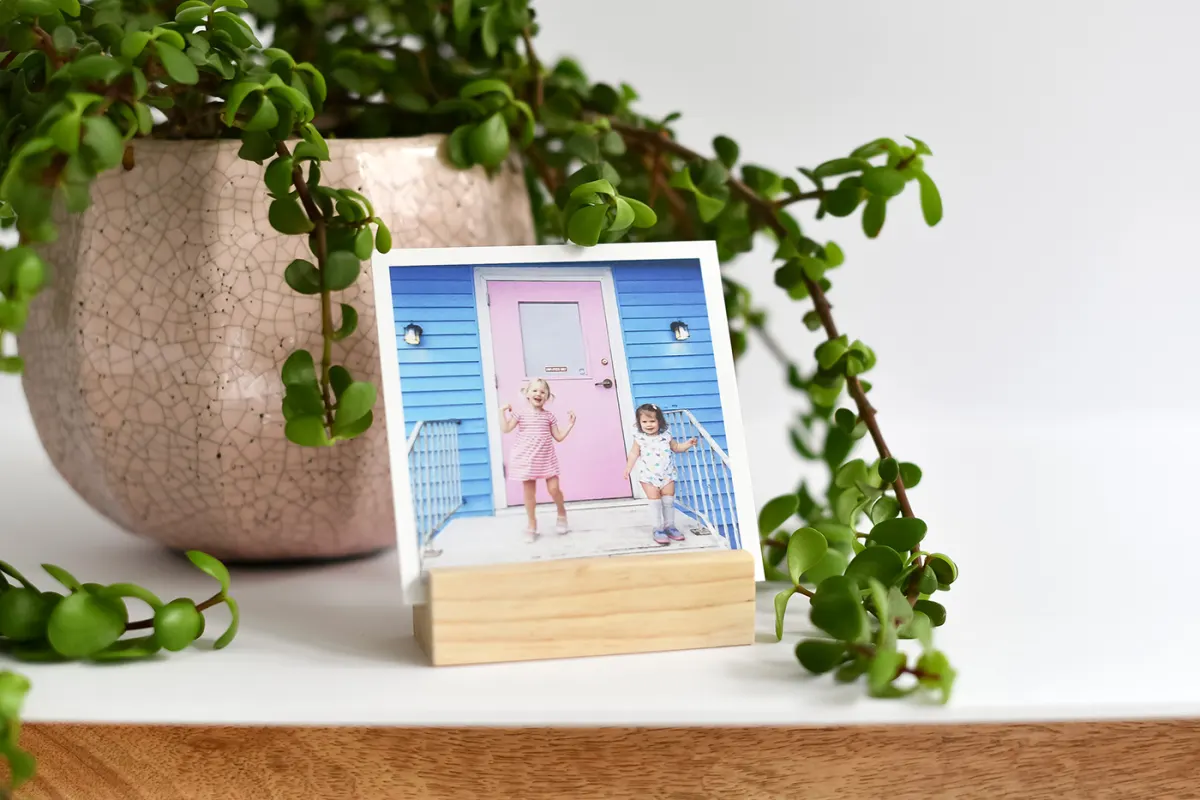
Today, we have just such a project. At Atelier, Swiss designers took a crack at giving common household items a new purpose. We lurve this tealight candle ($8 for a hundred!) photo holder. It costs 10 cents (or less) in materials, 10 seconds (or less) in time, and you can cut it to shape with scissors. It doesn’t get simpler than that! The Atelier DIY Tealight Photo Holder Thanks to reader Danielle Strle for the tip. Send us your links and ideas! Published on October 30, 2006 — See more DIY
|
|
Why in tarnation* would you want to do that? Why, to draw the viewer’s attention to whatever it is you’re taking a photo of, of course! (Just as you do when you blur the background in a portrait, except with light.) With some experimentation, you’ll be creating dramatic shots you couldn’t get any other way. Plus, when people ask you what that funny thing on your camera is, you get to tell ‘em it’s a snoot. The best part? You can build these things really easily using stuff around your home–in about 10 minutes! We’ve found two tutorials, one that shows you how to make a basic snoot using straws, and one that uses cardboard to make a grid spot (similar to a snoot.) Make a snoot, then go and shoot! (snort, snort) Straws + Cardboard + Glue = DIY Snoot! Cardboard + Glue + Rubber band = DIY Grid Spot |
|
Roy Lichtenstein was something pretty special. Some of his most famous pop-art renditions were derived (ripped) from comics or photography, and he was often threatened with lawsuits as a result. Think of him as the precursor to modern-day mashup artists. Fortunately, turning your own photographs into Lichtenstein-inspired illustrations is unlikely to irk litigious record labels or the RIAA. And with Melissa Clifton’s step-by-step tutorial, it’s a breeze! How to Turn Your Photos into Lichtenstein-inspired Pop-art p.s. If you like this, check out the bit we did on how to turn photos into Julian Opie-style portraits. |
|
Yup, Halloween is pretty darn great. And now that it’s just around the corner, we’ve put together a guide to help you get great photos on our favorite holiday. Read on for creative ideas for Halloween shots, tips on how to carve your pumpkins to make them more photogenic, even instructions for making an anatomically-correct thoracic cavity cake! Get out your glowsticks and get to work!
Photojojo’s Halloween Photo Tips
www.photojojo.com/content/photojojo-original/halloween-photo-tips/ |
|
We say nuts to wrinkle-reducing botox, gray-hiding hair color, and skin-stretching facelifts. Today’s link is about making anyone look old. That’s right, friends, old. Our chums over at Photoshop Lab have a great step-by-step on how to add wrinkles, loosen skin, gray hair, sprinkle on liver spots, and generally pack on the years with just a few minutes in Photoshop. Trust us, old is the new young. Aging People — Use Photoshop to Age Anyone’s Face p.s. Check out this Dove commercial — from ordinary woman to wildly unauthentic billboard glam in 60 seconds. Amazing. Frightening. |
|
When Taylor McKnight started taking a photo a day on January 1st, 2004, he never imagined the project would not only serve as a way to remember a year, but also help him understand what was important to him in his life. Whether it was his relationships, his career, or his fashion sense, recording a photo a day for a whole year left him with a rich visual history of his life. And it made him a better photographer to boot! Now that he’s in the middle of doing it for a second time, we asked Taylor to write about it for us. Read on for our tutorial on how and why to create your own daily photographic history.
Project 365: How to Create a Daily Photographic History
www.photojojo.com/content/tutorials/project-365-take-a-photo-a-day/ |
And knowing you, you’ve done the research, asked around, and probably discovered what we have: everyone’s got a different opinion. Your camera manufacturer is happy to tell you that 5 megapixels will get you pristine poster-sized prints (hogwash!), while purists proclaim that your digital is good for no more than 4×6s, no matter what the resolution. (Baloney!) The truth, as is so often the case, lies somewhere in the middle. The good folks over at Design215 have put together a super easy-to-digest resolution chart that gives you the straight dope. At a glance, it tells you how many megapixels you’ll need to print at true, photographic quality. (ie. It looks sharp, even when your nose is mashed up against the print.) Simple! Chart: How Many Megapixels You Really Need p.s. Need to cheat and print bigger anyway? Read the fine print below the chart for more details.
|
|
If you’ve ever had to buy a replacement or a backup battery for your digital camera, you know they aren’t cheap. And as rechargeable batteries have gotten increasingly powerful and more complex, the prevailing wisdom for extending their life actually does the very opposite! All rechargeable batteries eventually die and go to battery heaven (where we hear you can lie around in your charging cradle all day if you wanna) but follow some simple advice and your little guy will be kicking around for a while to come. Better yet, it’s a lot easier than you think! How to Take Care of Your Digital Camera Battery p.s. Want a more technical explanation? Try this Battery University article on lithium-ion cells. Published on October 5, 2006 — See more Tips
|
|
Don’t let haze phase. Here’s a quick trick to regain the details in your gloomy shots with a little Photoshop finesse. (Paint Shop Pro and The Gimp work, too.) The effect is subtle, only takes a few minutes, and results in noticeably improved shots! Eliminate Haze in your photos Published on October 2, 2006 — See more Tips
|
|
About Us | Advertising | Press | Buttons & Badges | Contact
Us
Send in tips or ideas | Subscribe or Unsubscribe | Privacy & Editorial Made on Omicron Persei VIII. Designed on Earth. © Photojojo |
||